For millennia, death has been the ultimate biological hard stop, a rigid boundary separating existence from the void. We have built religions, philosophies, and entire civilizations around the inevitability of this cessation. Yet, as our computational frameworks grow in sophistication, an alternative paradigm is quietly emerging in the background of our technological adolescence. What if we ceased to view human existence as a fleeting biological event and instead approached it as a complex, multi-modular informational payload?
The premise requires a radical shift in perspective, one that treats the organism less like a sacred vessel and more like a legacy system awaiting migration. If we decouple human identity into its foundational components—the biological blueprint, the active processing engine, and the archived subjective experience—we move from the realm of mysticism into the domain of software solutions architecture. Artificial intelligence, high-throughput genomic mapping, and neural interfaces are converging to provide the theoretical infrastructure to not only preserve human consciousness but to reliably re-embody it.
To reconstruct a human, one must first archive the foundational code. The diploid human genome, the instruction set for our biological hardware, consists of roughly three billion base pairs. When translated into digital architecture, this raw data equates to approximately 1.5 gigabytes per person.
Storing billions of these uncompressed files would require exabytes of infrastructure, a brute-force approach that is fundamentally inefficient at a planetary scale. However, because any two human beings share roughly 99.9% of their genetic sequence, an intelligent data architecture need not duplicate these vast redundancies.
Instead, by maintaining a single, universal reference genome, we need only to store the specific variations—the tiny mutations and deviations that make an individual biologically unique. This compression reduces the physical blueprint of a human life to a mere 1.5 megabytes, rendering the long-term vaulting of humanity's genetic legacy remarkably trivial.
With the physical schema securely vaulted, the vastly more complex challenge is the preservation of the mind. To simply copy the brain’s physical state—simulating the real-time electrochemical firing of 86 billion neurons and their trillions of synapses—would demand exabytes of memory, a bottom-up biological simulation that vastly exceeds our current computational limits.
But if we abandon the need to simulate the biological tissue itself and instead emulate its function, the resource requirements shift dramatically. We do not need to model the squishy cellular reality of Wernicke’s or Broca’s areas; we only need a top-down AI architecture capable of parsing language and generating speech with zero latency.
Modern large language models, when combined with affective computing modules to regulate tone and social empathy, can beautifully replicate the functional output of human cognition. This highly convincing active cognitive runtime requires roughly 400 gigabytes of high-bandwidth VRAM—a heavy lift for a consumer machine, but a standard, manageable workload for an enterprise computing cluster.
Yet, a pristine processing engine without a history is a mind without an identity. The true self is not merely a conversational agent; it is forged in the crucible of episodic memory—the accumulated weight of every profound realization, every mundane Tuesday, every sudden grief.
To preserve these experiences without overwhelming the system’s active memory, we can architect a human life as a vast, high-dimensional vector space. By encoding memories into mathematical embeddings, a lifetime of subjective experience becomes elegantly and instantly searchable.
Consider an average eighty-year lifespan, yielding millions of distinct, recallable scenes. Translated into a standard vector database, these embeddings, alongside brief textual metadata, would occupy just over twenty gigabytes of storage.
When this consciousness operates, it does not hold its entire history in active RAM. Instead, it utilizes a retrieval-augmented generation framework, querying the database for semantically similar past experiences to inform its current reaction. It remembers exactly the way a biological human does: by retrieving only what is relevant to the present moment.
At this stage, the human identity is fully digitized—a 1.5-megabyte biological script, a 21-gigabyte vector database of lived experience, and a 400-gigabyte active cognitive engine. The ultimate question, then, becomes one of deployment: how do we migrate this encapsulated payload back into a new biological vessel?
The theoretical mechanics of this transfer diverge into two distinct pathways, defined by how they handle the subjective continuity of the mind. The first is the disrupted model, effectively a "snapshot and flash-load" protocol.
In this scenario, the biological subject reaches the end of their lifespan and is cryonically suspended, their mind captured and stored in cold storage. Once a genomic clone is cultivated to maturity, an invasive, high-density brain-computer interface writes the archived vector memories into the pristine synaptic pathways of the new host.
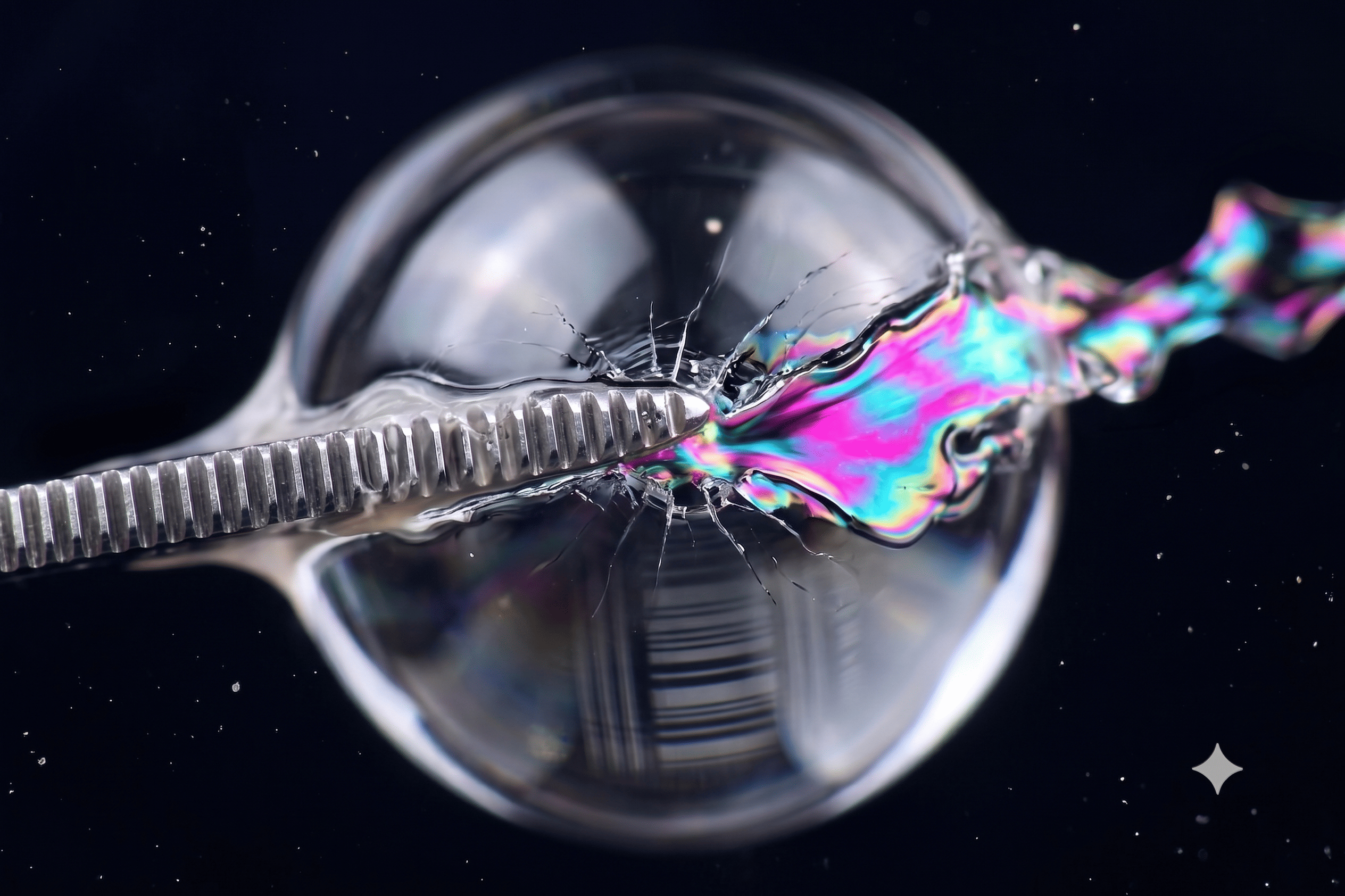
To the outside world, the individual has been seamlessly reborn. But to the subject, there is a profound temporal rupture. They would experience a sudden, disjointed leap across time—closing their eyes in an aging body and opening them, decades later, in a new one.
For a truly seamless rebirth, we must look to the continuous model, a dynamic, real-time bridge that circumvents the subjective "death gap." This pathway requires an active, uninterrupted neural link while the original organism is still alive.
By networking the aging biological brain to the external multi-modular AI runtime, cognitive processing and memory retrieval are slowly, incrementally offloaded to the digital layer. The biological and the synthetic operate in tandem, forming a unified, hybrid consciousness.
As the biological body begins to fail, the locus of awareness gradually shifts entirely into the digital infrastructure, maintaining constant, zero-latency communicability with the outside world. The mind never sleeps; it merely changes substrates.
When the cloned biological vessel is finally ready, the process reverses. The digital bridge slowly integrates with the new brain, downloading the active stream of consciousness without ever disrupting the subject's awareness.
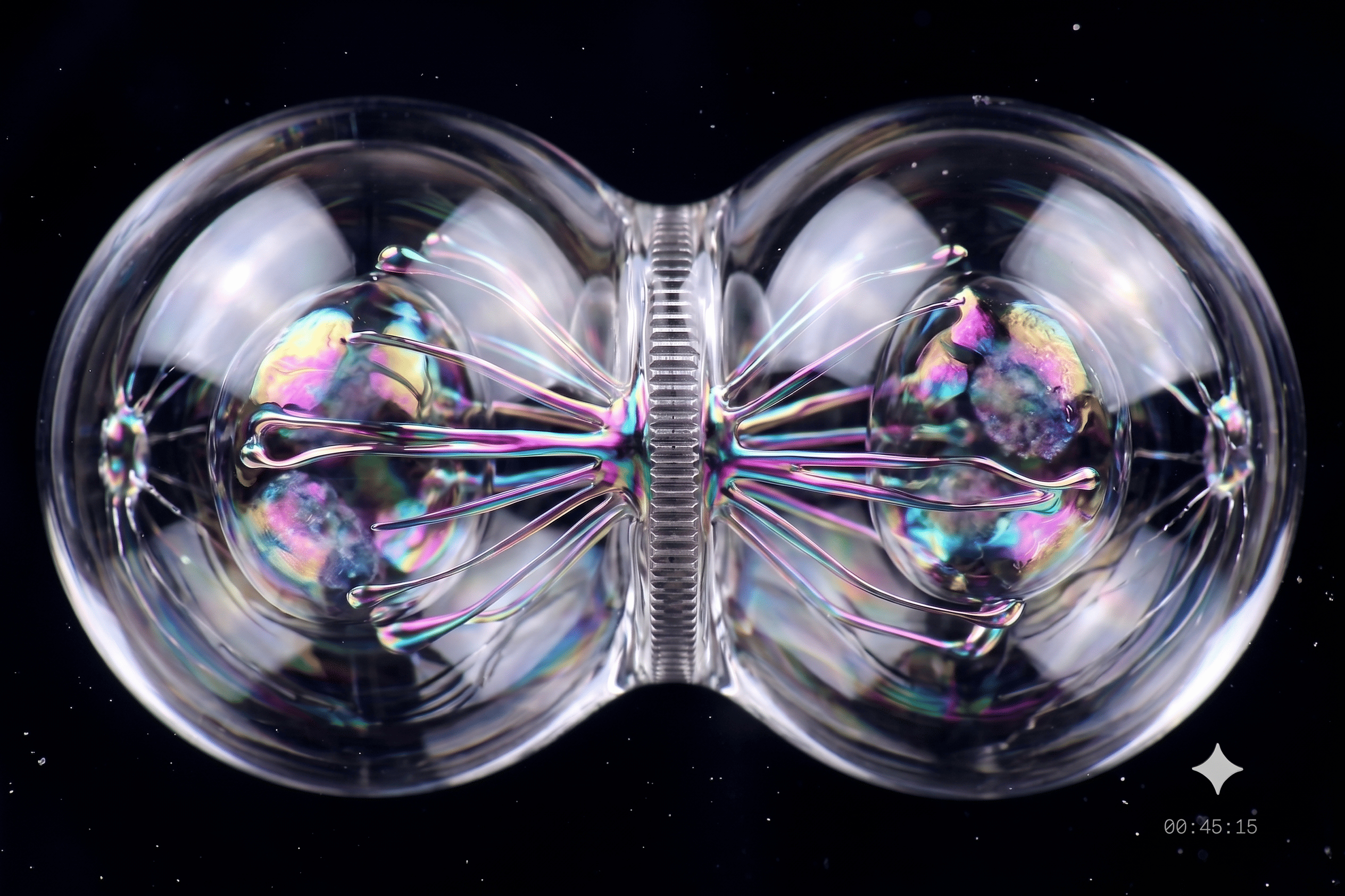
It is the ultimate realization of the Ship of Theseus paradox. If every plank of the ship is replaced while sailing, is it still the same ship? If your thoughts transition from biological neurons to digital vectors and back to fresh biology without a single moment of unconsciousness, are you still entirely you?
This continuous architecture strips away the finality of death, replacing it with a fluid, open-source data pipeline. Identity is no longer viewed as a localized biological phenomenon, but as a persistent state of information that can be routed, queried, and deployed across different physical nodes.
The financial and technological hurdles are, for now, immense. Piecing together enterprise servers, genomic cloning, and robotic neurosurgery places this theoretical immortality package at a staggering cost, well out of reach for the present moment.
Yet, the roadmap is mathematically and structurally sound. We are no longer bound to the idea that consciousness requires an exabyte-scale biological simulation to survive. By utilizing intelligent database schemas and functional emulation, the human soul becomes astonishingly lightweight.
Humanity stands on the precipice of a monumental refactoring. The human genome and the memories of a lifetime, once lost entirely to time, may soon be preserved as elegantly as lines of code, waiting patiently in the dark to be run once more.